


BLOG
Can Fleet Focus help me manage electric vehicles as well as diesel fleets?
The Evolution Toward Mixed-Fleet Operations
The electrification of commercial fleets is accelerating. Zero Emission Vehicle mandates, clean air zone charging structures, corporate sustainability commitments and improving total cost of ownership calculations are all driving operators towards EVs, and the pace of adoption means that most medium and large commercial fleets are now operating mixed fleets, with electric vans alongside diesel HGVs, hybrid cars alongside traditional commercial vehicles, or full battery-electric vehicles in urban delivery roles alongside longer-range diesel assets on national routes. Managing this complexity through separate systems, a legacy telematics platform for diesel vehicles, a manufacturer app for the EVs, a spreadsheet for charging, is neither operationally effective nor scalable.Unified Platform Integration for Alternative Powertrains
Fleet Focus supports EV fleet management as a fully integrated capability within our platform, not as a separate module or an add-on service. This means that a fleet manager operating a mixed fleet of diesel HGVs and electric vans sees all of their vehicles in a single platform, with the same interface, the same GPS tracking, the same AI camera system and the same driver behaviour monitoring, with the EV-specific data streams from the CANbus integration providing the additional intelligence that electric vehicles require.Critical Range Management and Operational Risks
The most fundamental EV-specific challenge for fleet managers is range management, ensuring that vehicles have sufficient charge to complete their assigned work without running out of energy in service. Unlike a diesel vehicle, where a driver can stop at any filling station and resolve a low-fuel situation in five minutes, an EV that runs low on charge requires access to a specific type of charging infrastructure and a wait time measured in minutes or hours depending on the charger type and the vehicle’s battery capacity. Running out of charge in service is operationally disruptive in a way that running low on diesel is not.Real-Time State-of-Charge and Predictive Range Monitoring
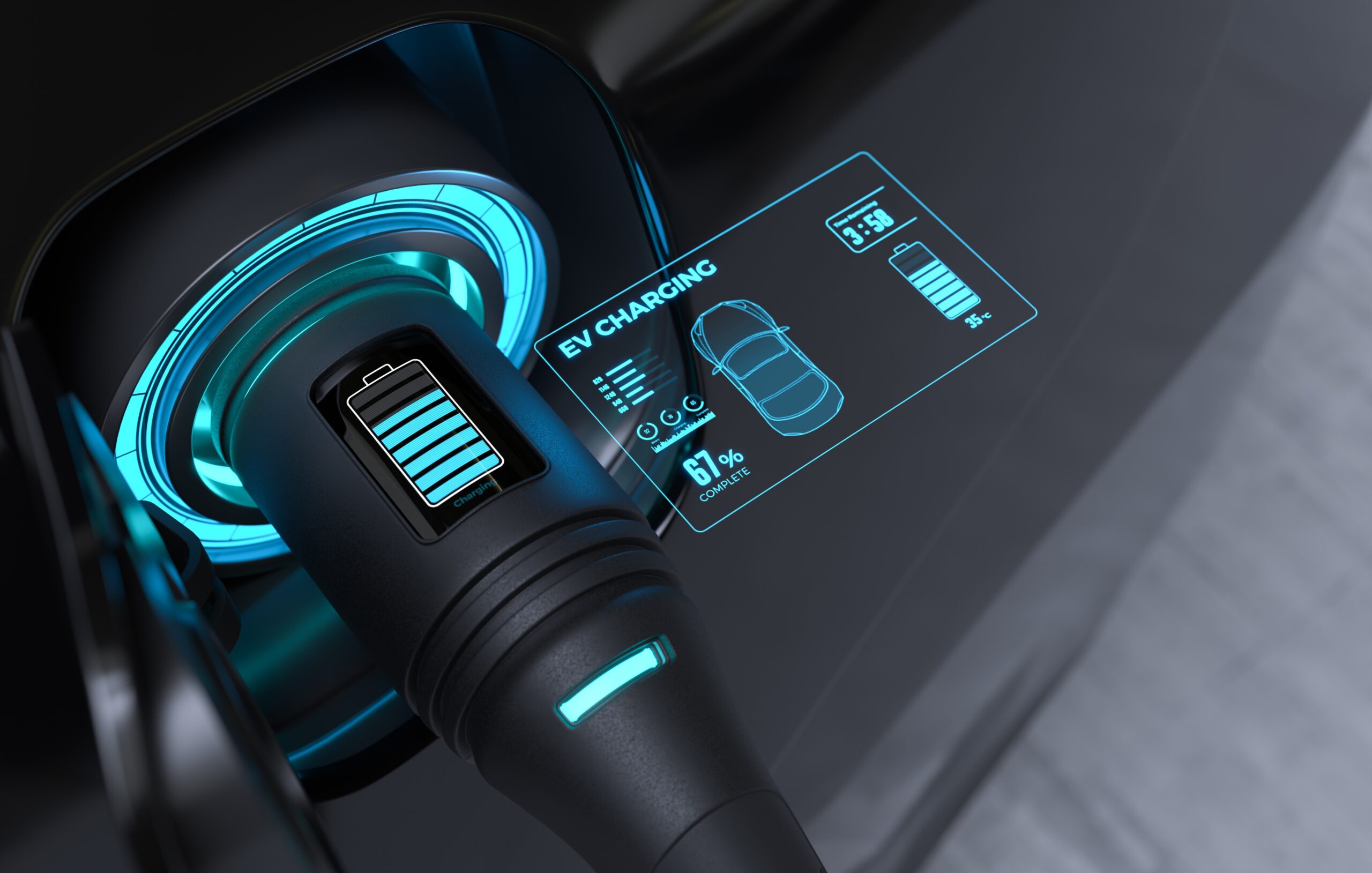
Fleet Focus addresses this through CANbus-integrated battery state-of-charge monitoring. The platform displays the live battery level of every EV in the fleet, updated continuously throughout each journey. Predicted range, calculated from the vehicle’s actual battery level, its current driving pattern and its historical energy consumption data, is available alongside the state-of-charge reading, giving fleet managers a realistic picture of how far each vehicle can travel before needing to charge. Range estimates that account for actual driving behaviour are substantially more accurate than the manufacturer estimates displayed on the vehicle’s dashboard, because they reflect the specific conditions of the route and the individual driver’s efficiency.Longitudinal Battery Health and Asset Degradation
Battery health monitoring is a longer-term but equally important capability. Lithium-ion battery packs in commercial EVs degrade over time, and the rate of degradation depends on charging patterns, temperature exposure, usage intensity and a range of other factors. A fleet manager who cannot monitor battery health across their EV fleet cannot make accurate residual value estimates, cannot plan battery replacement or vehicle disposal timing, and cannot identify vehicles whose range has degraded to the point where they can no longer reliably complete their assigned routes. Fleet Focus CANbus monitoring tracks battery health metrics over time, providing the longitudinal data that informed EV asset management requires.Charging Infrastructure Oversight and Cost Allocation
Charging event monitoring through the platform records the start and end time, location, duration and energy delivered for every charging event across the fleet. This data is valuable for several operational purposes: verifying that drivers are charging at approved locations, ensuring that vehicles are being charged to the correct level for their next assigned journey, managing the cost allocation of charging across different depot sites or charging networks, and identifying vehicles whose charging behaviour suggests a battery or charging system issue. The charging record also supports accurate cost-of-ownership analysis by capturing the actual energy cost of operating each vehicle over time.Impact of Driver Behaviour on Energy Depletion
Driver behaviour has a significantly larger impact on EV range than on diesel consumption, because regenerative braking, acceleration patterns and auxiliary system usage all directly affect battery depletion rate. The Fleet Focus AI driver monitoring system measures EV driving efficiency alongside the standard safety metrics, enabling coaching conversations that address not just safety but energy consumption. A driver who accelerates harshly and brakes hard on an EV journey is not just creating safety risk; they are reducing the vehicle’s effective range by a meaningful amount. Coaching that addresses this improves both safety and operational efficiency simultaneously.Data-Driven Route Analysis and Transition Planning
Fleet Focus also supports the planning dimension of EV management through route analysis. By correlating journey history, energy consumption data and charging event records, the platform can identify which routes are within the reliable operating range of specific vehicles, which journeys require charging stops and at what point, and whether the current charging infrastructure is adequate for the fleet’s operational requirements. For operators planning fleet electrification, this data provides an evidence base for infrastructure investment decisions. For fleets transitioning from diesel to electric over a multi-year programme, our platform supports the entire journey, managing diesel vehicles and EVs with equal effectiveness within a single system, eliminating the fragmentation and inefficiency of parallel systems during the transition period.To discuss EV fleet management with Fleet Focus, call 0800 009 3006 or request a call back.
The Bottom Line
Electric vehicle management requires a fundamentally different approach to fleet operations, and operators who attempt to manage EVs with tools designed for diesel fleets will encounter range anxiety, charging inefficiency and battery degradation they cannot predict or prevent. Fleet Focus provides the CANbus-integrated EV management capability that turns these challenges into manageable operational variables. Whether you are running a fully electric fleet today or transitioning progressively over the next five years, our platform provides the data intelligence your operation needs.References
- Department for Transport – Zero Emission Vehicle (ZEV) Mandate: Guidance for Fleet Operators. Available at:https://www.gov.uk/government/consultations/zero-emission-vans-regulatory-flexibility/zero-emission-vans-regulatory-flexibility
- Office for Zero Emission Vehicles (OZEV) – Electric Vehicle Infrastructure Strategy. Available at:https://www.gov.uk/government/publications/zero-emission-vehicles-transition-council-2022-action-plan/zero-emission-vehicles-transition-council-2022-action-plan
- Clean Air Zone Framework – UK Government Guidance. Available at:https://www.gov.uk/clean-air-zones
- Energy Saving Trust – Electric Vehicles for Fleets. Available at:https://energysavingtrust.org.uk/advice/electric-vehicles/
- Fleet Focus – our platform EV Fleet Management Module Technical Specification, 2024.
Book Your Free Trial
Take control of trailers, tools and equipment with Fleet Focus BLE tracking. Simple to install, low cost, fully integrated, and built for real fleets.